Internationales Festival Zeichen der Nacht - Berlin - International Festival Signs of the Night |
|
11. Internationales Festival Zeichen der Nacht / Berlin Edition
24th International Festival Signs of the Night / Worldwide
June 9 - 14, 2026
Kino & Bar in der Königstadt - - - Straßburger Straße 55 - - - 10405 Berlin (Prenzelberg) |
|
|
Berlin
Kino & Bar in der Königstadt
Straßburger Str. 55
Sunday
June 14th, 2026
20 h (8 pm)
|
|
|
|
|
Doris Schmid |
Germany / 2025 / 019:24 |
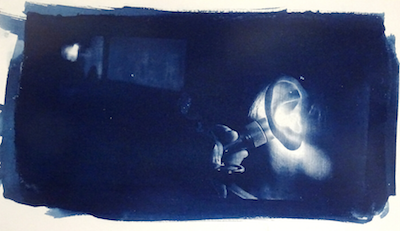
A reflection on perception, imagination and on artistic expression of the collective real, external world, in relation to the subjective inner life of each individual. The basic structure of the video rests on three strands, which are poetically interwoven into a singular composition consisting of: Photographic images by the artist, improvised sound by a musician and poetry.
The Musians Eunice Martins
will be present for a Q/A |
|
|
 |
|
|
Marvin Menné |
Germany / 2025 / 0 29:50 |
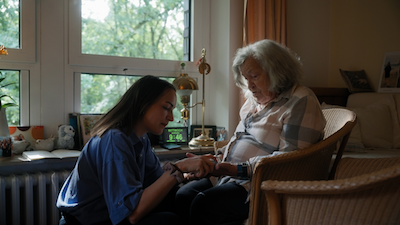
Dosi has been living with Alzheimer's disease since 2020. Despite her increasing memory loss, one wish remains for the 91-year-old: she wants to visit Nonnenhorn on Lake Constance one last time, where she spent two years during the war. Together with her granddaughter Carla, she travels from the retirement home in Berlin to the place of her memories. "What Remains?" documents the many facets of Alzheimer’s while also highlighting the close bond between two women of different generations. Dosi’s humor and stubbornness are just as present as her forgetfulness and the sadness that comes with it. As they navigate this emotional journey together—with all its ups and downs—the question arises: what remains when memory fades?
The Producer Carla Gumbrecht
will be present for a Q/A |
|
|
|
|
|
José Crúzio, Martin Gerigk |
Germany, Portugal / 2026 / 0:05:00 |
The short film I WAS HERE is part of the Portuguese I WAS HERE project, a series of short videograms conceived as records of visits to “non-places” and “places”—transitional or passing points, whether circumstantial or intentional. Through a process of revision and additional composition, these locations are given new value and meaning, incorporating sound and interpretations from different sources while simultaneously revealing their main references. The project ultimately takes the form of a collaborative work, particularly through the co-production of sound.
I WAS HERE features the widely known poem “Man and Machine” by D.H. Lawrence. Written in 1932, it already appears as a strikingly realistic prophecy of the current interaction between humanity and artificial intelligence. In “Man and Machine”, D.H. Lawrence reflects on the growing dominance of technology over human life. The poem suggests a tension between the organic, emotional nature of human beings and the cold, mechanical logic of machines. Lawrence portrays the machine as something powerful yet ultimately alien to human vitality, warning that an excessive reliance on technology may distance people from their instincts, creativity, and natural rhythms. Seen from today’s perspective, the poem appears surprisingly relevant. In an age shaped by digital networks, automation, and artificial intelligence, Lawrence’s concerns echo current debates about how technology reshapes human relationships, work, and perception. While machines can enhance efficiency and expand possibilities, they also risk reducing human experience to systems, data, and productivity. Lawrence’s poem therefore reads as an early reflection on a question that remains urgent today: how to preserve human sensitivity, individuality, and connection to the living world in an increasingly technological society.
|
|

|
|
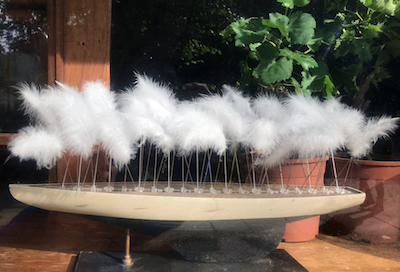
A voice addresses us. It speaks from near the ground. A voice from earth, ritual and oblivion. It tells of a time when bodies were permeable: for rituals, for states beyond heaviness. Of rubs that supposedly enable flying — not as movement in space, but as falling out of order and identity. Of bodies that forgot their limits. The voice speaks of healing and intoxication, of pain relief and loss of control. Of knowledge that was simultaneously used, revered and persecuted. Towards the end, the perspective shifts: Knowledge that does not come from observation, but from embodiment: This is not about a plant— The voice does not belong to a human being. It speaks from another body.
|
|
|
|
|
Susann Maria Hempel |
Germany / 2025 / 0:12:30 |
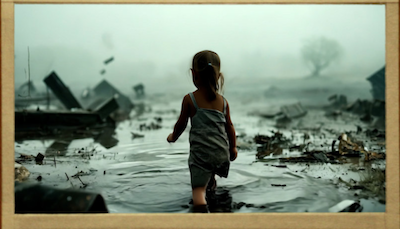
"Hope Road" reflects the filmmaker’s artistic journey in a world shaken by crises and wars, as the mother of a small child whose existence seems to demand something dif- ferent from her than the production of art. While the ‘old world’ of the artist founders, she escapes from the dysto- pian scenarios of the present by taking up the child’s point of view.
|
|
 |
|
|
|
|
|
|
| |
|
|
| |
|
|
| |
|
|
|
|
|


