Internationales Festival Zeichen der Nacht - Berlin - International Festival Signs of the Night |
|
11. Internationales Festival Zeichen der Nacht / Berlin Edition
24th International Festival Signs of the Night / Worldwide
June 9 - 14, 2026
Kino & Bar in der Königstadt - - - Straßburger Straße 55 - - - 10405 Berlin (Prenzelberg) |
|


|
Berlin
Kino & Bar in der Königstadt
Straßburger Str. 55
Wednesday June 10th, 2026
22 h (10 pm)
|
|
|
|
Souvenirs d'un ami |
Olivier Smolders |
Belgium / 2025 / 0:24:20 |
A narrator tells the story of an eccentric childhood friend.
|
|
|
|
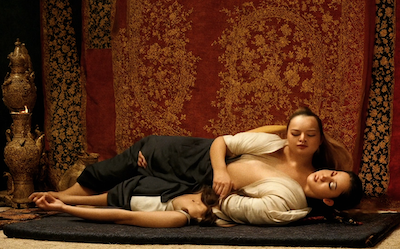
Dong Shen Shi |
Guoju Wang |
United Kingdom, China /2025 / 0:29:5 |
In Chinese, ‘golden-age’ and ‘mirage’ share the same sound. Amid the 2024 economic decoupling, a single mother struggling to keep accessories business afloat in Yiwu, China’s largest export hub, must come to terms with memories of her late father's orchid on the Winter Solstice and reclaim her opera job to fund her son's overseas study. It enters into a dialogue with the early styles of Tsai Ming-liang and Chantal Akerman.
|
|

|
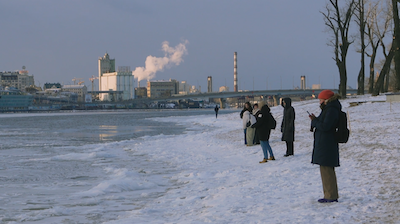
I Do Not See When Shooting
|
| |
Anastasia Stetsenko |
Ukraine / 2025 / 0:15:40 |
Two friends drift through Kyiv’s »yebenya« (Ukrainian slang: a remote, forgotten place — literally »the ass-end of nowhere«), hopping city trains, tracing smokestacks, and power lines of Ukraine’s wounded electrical grid, chatting about the (in)ability to cry. An old DV camera is obsessed with smoke dissolving into clouds, its gaze repeatedly cut by military commands enforcing martial law: »Look, how beautiful.«— »I don’t care. Delete it.« They erase — and film again. Filming becomes defiance, a way to insist on being alive. The trembling image searches for something to hold onto in a stifling reality, pausing on a familiar face and zooming in on teary eyes. »I really need this.« A raw, electrifying debut, where choosing what to see becomes an act of resistance.
|
|
|
|
|
Dorian Jespers |
Belgium, France, United Kingdom, North Macedonia / 2025 / 0:25:05 |
In 19th-century Liverpool, we follow a trial that is as baroque as it is absurd, one that unfolds more like a spectacle than a legal proceeding: a corpse, with no name or origin, falls from the sky and is brought to court. Rules are cited, invented, followed, ignored, and disregarded; compromises and solutions are sought and found—unless fate intervenes once again. A film like a painting. One might almost think that this is not about law and justice, but about a compromise that looks beyond words for an external scapegoat and ensures cohesion. The chaos and confusion that remain in the process relegate the defenseless corpse to its place as a scapegoat. It is less about guilt than about its mere existence and function, which provides an occasion for the (self-representation of the living.
|
|

|
| |
|
|
|
|
|
|
|
| |
|
|
| |
|
|
| |
|
|
|
|
|


